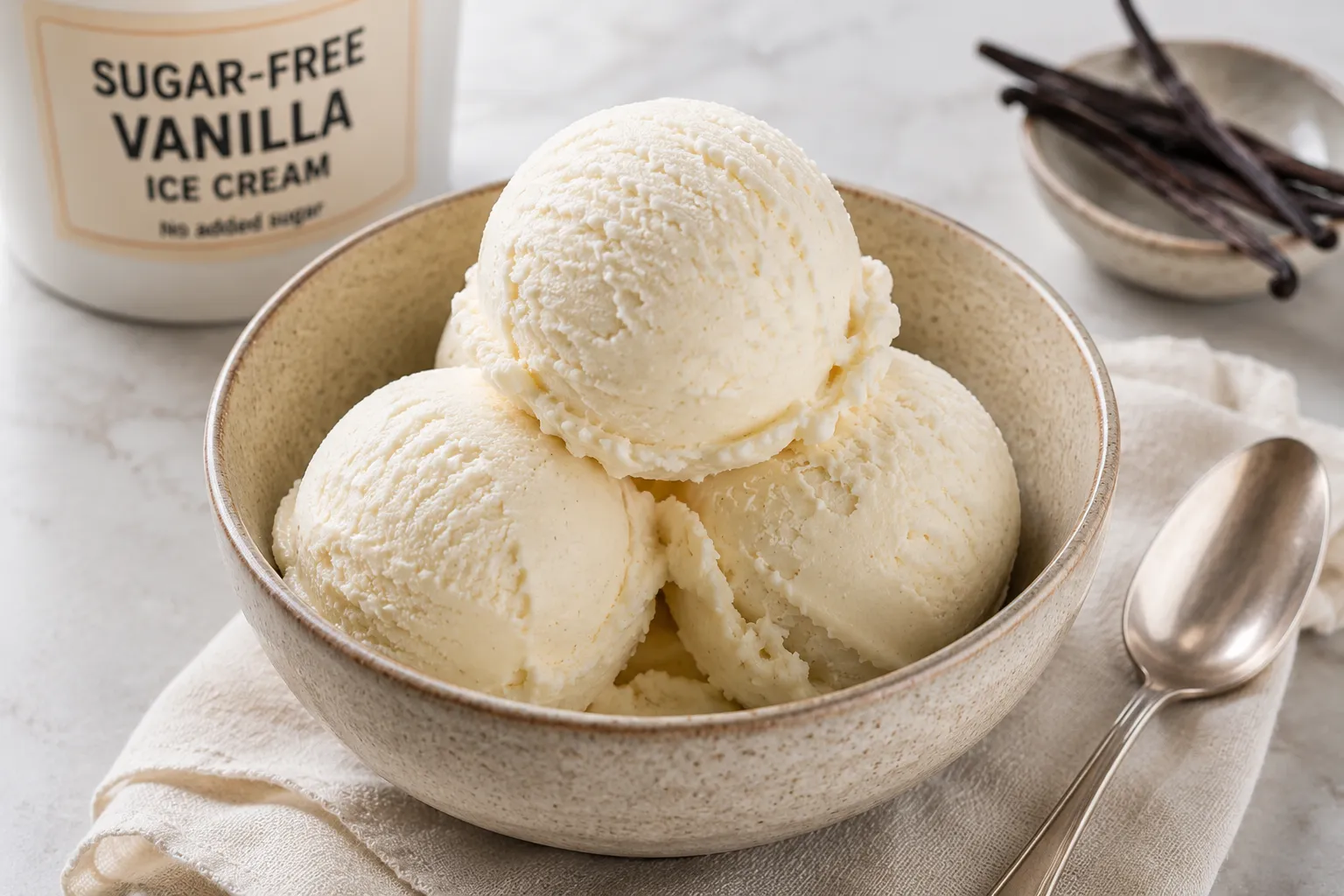
Choose your style: Decide between a custard base (richer, silkier) or a Philadelphia-style base (no eggs, lighter). If using eggs, you’ll cook a quick custard.
If not, you’ll blend and chill.
For custard-style: In a medium saucepan, whisk 1 cup cream, all the milk, sweetener, and salt. Warm over medium heat until steaming.
Temper the yolks: In a bowl, whisk egg yolks. Slowly drizzle in 1/2 cup of the hot mixture while whisking, then pour back into the pot.
Cook to thicken: Stir constantly over medium-low heat until the mixture lightly coats the back of a spoon, about 5–7 minutes.
Do not boil. Remove from heat.
Add stabilizer: Whisk in xanthan gum (sprinkle very lightly to avoid clumps) or stir in pre-bloomed gelatin until dissolved. This step helps keep the ice cream soft and smooth.
Finish the base: Stir in remaining 1 cup cream, vanilla, and vodka if using.
Taste and adjust sweetness—remember flavors dull slightly when frozen.
Chill thoroughly: Strain the base into a clean bowl, cover, and refrigerate until very cold—at least 4 hours, ideally overnight. A cold base churns better and traps more air.
For no-egg style: Whisk all ingredients (including stabilizer) in a blender until smooth. Chill as above.
Churn: Pour the cold base into your ice cream maker and churn per manufacturer’s instructions, usually 20–25 minutes, until it looks like soft-serve.
Freeze to set: Transfer to a shallow, airtight container.
Press parchment on the surface to prevent ice crystals. Freeze 3–4 hours for scoopable firmness.
No-machine method: Freeze the chilled base in a shallow pan. Stir vigorously every 30–45 minutes for 3–4 hours, breaking up ice crystals.
A hand mixer helps. It won’t be as airy, but it’s still delicious.
Serve: Let the container sit at room temperature for 5–10 minutes before scooping. Sprinkle a pinch of flaky salt on top for a flavor boost, if you like.