Coconut Flour Pancakes (Sugar-Free) – Light, Fluffy, and Satisfying
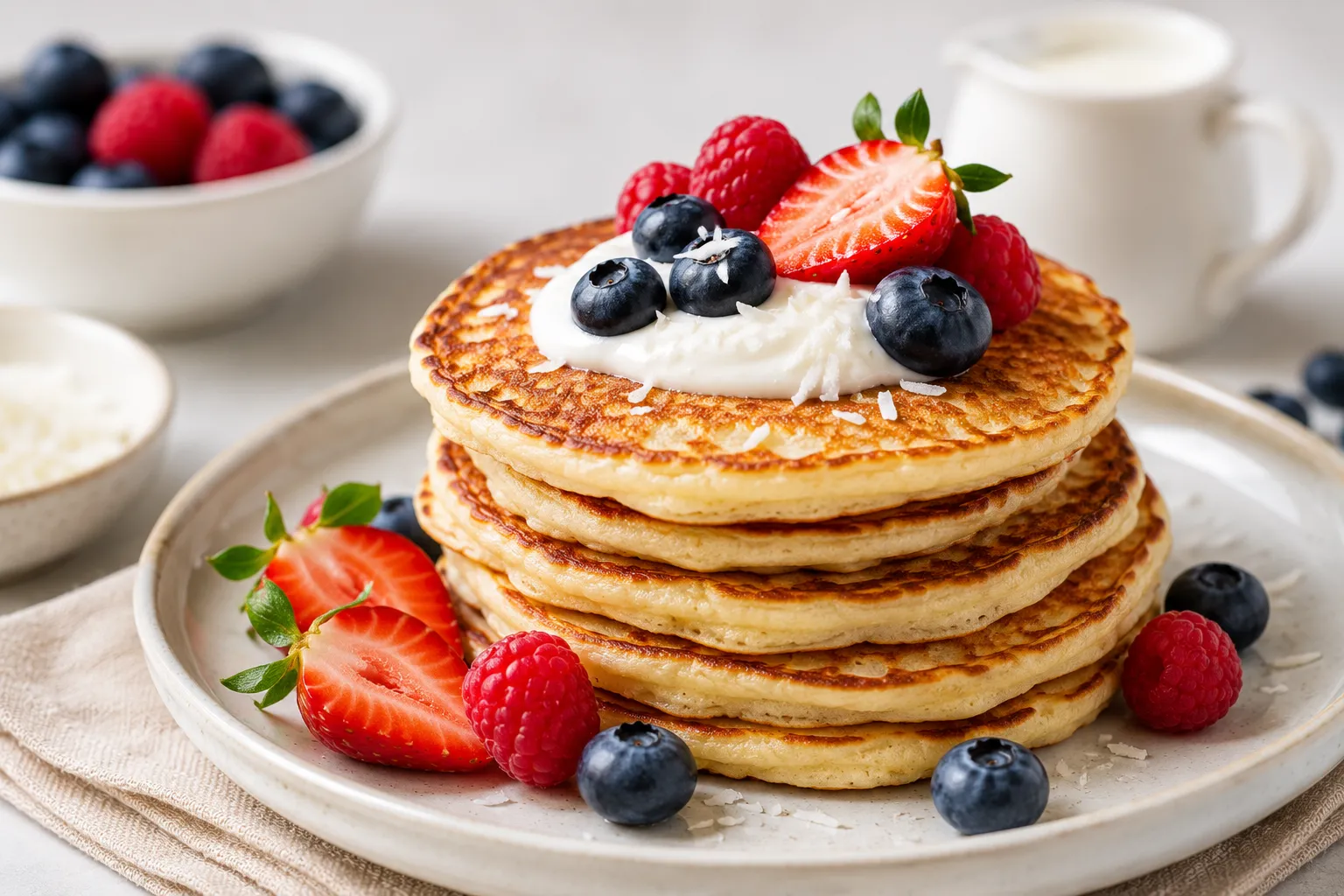
These coconut flour pancakes are a simple, feel-good breakfast you can whip up on any weekday. They’re naturally grain-free, low in carbs, and fully sugar-free—without tasting like a compromise. The batter comes together in minutes, and the pancakes cook up light and tender with a hint of coconut.
You’ll get that classic pancake vibe, just lighter on your stomach and steady on your energy. If you want a tidy stack you can dress up or keep plain, this is the recipe to keep on repeat.
Ingredients
Method
- Warm the pan: Set a nonstick skillet or griddle over medium-low heat so it’s hot when the batter’s ready.
- Whisk the wet ingredients: In a bowl, whisk eggs, milk, yogurt, melted butter or coconut oil, and vanilla until smooth.
- Add the dry ingredients: Sprinkle in coconut flour, baking powder, sweetener (if using), and salt. Whisk until no dry spots remain.
- Let it thicken briefly: Rest the batter for 2–3 minutes. Coconut flour absorbs liquid and the batter will thicken to a scoopable consistency.
- Adjust if needed: If the batter is too thick to pour, add a tablespoon of milk at a time.If too thin, sift in a teaspoon of coconut flour and wait a minute.
- Grease and portion: Lightly oil the pan. Use about 2 tablespoons of batter per pancake to make 3–4 inch rounds. Smaller pancakes flip easier.
- Cook gently: Cook 2–3 minutes until edges look set and small bubbles form.Flip carefully and cook 1–2 minutes more. Lower heat if they brown too fast.
- Repeat: Grease the pan lightly between batches to prevent sticking. Keep finished pancakes warm in a low oven.
- Serve: Plate with sugar-free toppings like fresh berries, a pat of butter, a dollop of yogurt, or a drizzle of warm sugar-free syrup.
What Makes This Special
- Truly sugar-free: Sweetened with a zero-calorie sweetener or left unsweetened so toppings can shine.
- Fluffy, not flat: Coconut flour is thirsty, but with enough eggs and a little fat, you get lift and softness.
- Quick and pantry-friendly: Uses everyday staples and one bowl. No resting time required.
- Flexible for diets: Naturally gluten-free and easy to make dairy-free or nut-free.
- Freezer-friendly: Make a batch once, enjoy all week.
What You’ll Need (Ingredients)
- Coconut flour: 1/2 cup, spooned and leveled.
This provides the structure and fiber.
- Eggs: 4 large. They bind and lift the batter.
- Milk of choice: 1/2 cup. Use unsweetened almond milk, coconut milk, or dairy milk.
- Greek yogurt or coconut yogurt: 1/4 cup for moisture and tenderness.
- Butter or coconut oil (melted): 2 tablespoons to enrich the batter.
- Baking powder: 1 1/2 teaspoons for fluff.
- Vanilla extract: 1 teaspoon for flavor.
- Granular sugar-free sweetener (optional): 1–2 tablespoons, to taste.
Erythritol, allulose, or monk fruit blend.
- Salt: 1/4 teaspoon to balance sweetness.
- Oil or butter for the pan: Enough to lightly grease between batches.
Instructions
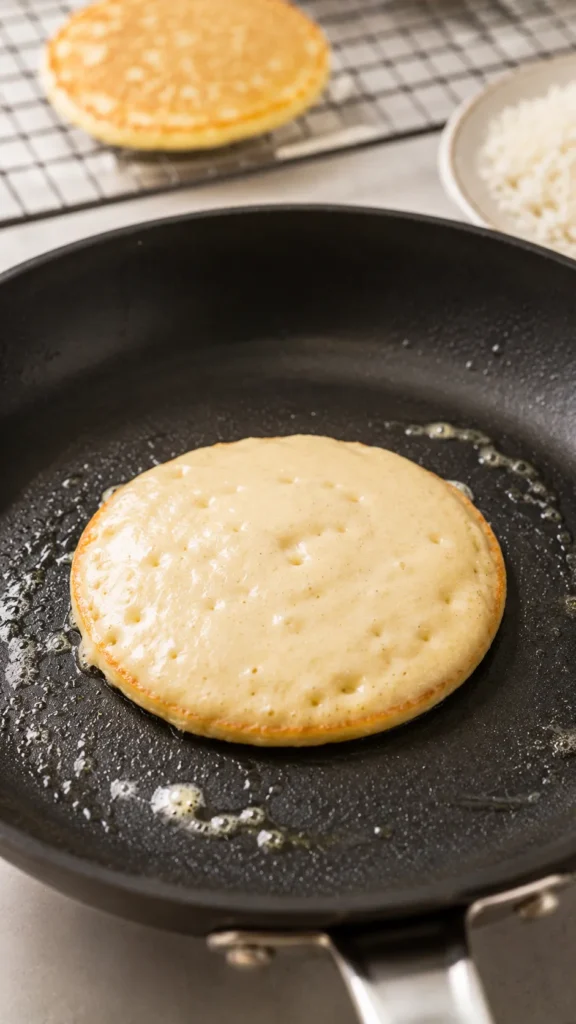
- Warm the pan: Set a nonstick skillet or griddle over medium-low heat so it’s hot when the batter’s ready.
- Whisk the wet ingredients: In a bowl, whisk eggs, milk, yogurt, melted butter or coconut oil, and vanilla until smooth.
- Add the dry ingredients: Sprinkle in coconut flour, baking powder, sweetener (if using), and salt. Whisk until no dry spots remain.
- Let it thicken briefly: Rest the batter for 2–3 minutes. Coconut flour absorbs liquid and the batter will thicken to a scoopable consistency.
- Adjust if needed: If the batter is too thick to pour, add a tablespoon of milk at a time.
If too thin, sift in a teaspoon of coconut flour and wait a minute.
- Grease and portion: Lightly oil the pan. Use about 2 tablespoons of batter per pancake to make 3–4 inch rounds. Smaller pancakes flip easier.
- Cook gently: Cook 2–3 minutes until edges look set and small bubbles form.
Flip carefully and cook 1–2 minutes more. Lower heat if they brown too fast.
- Repeat: Grease the pan lightly between batches to prevent sticking. Keep finished pancakes warm in a low oven.
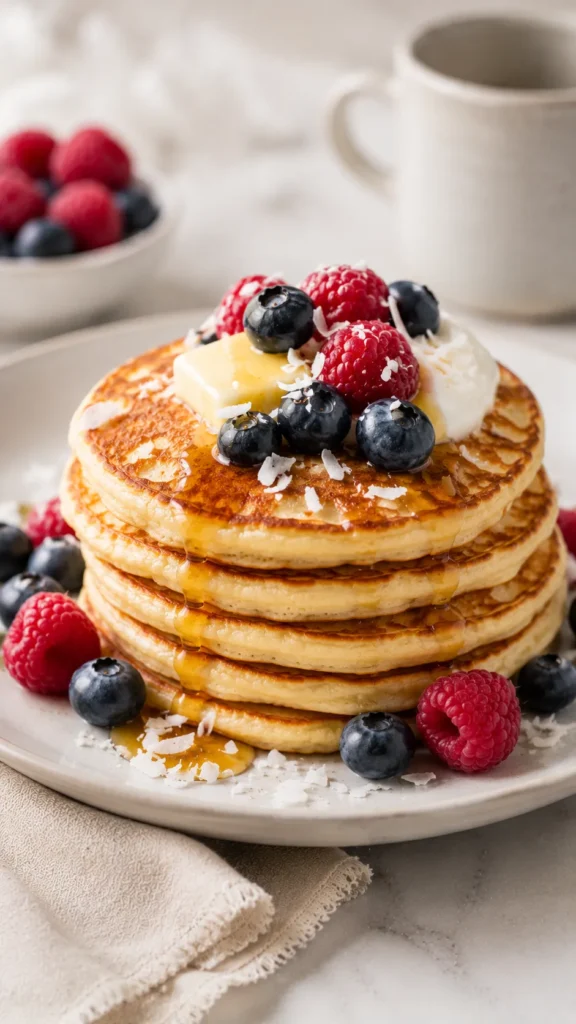
- Serve: Plate with sugar-free toppings like fresh berries, a pat of butter, a dollop of yogurt, or a drizzle of warm sugar-free syrup.
Storage Instructions
- Refrigerator: Cool completely, then store in an airtight container for up to 4 days.
Reheat in a toaster or skillet.
- Freezer: Freeze in a single layer until firm, then stack with parchment between pancakes. Store up to 2 months in a freezer bag.
- Reheating: Toast from frozen, or warm in a covered skillet over low heat. Avoid the microwave if you want to keep them fluffy.
Why This is Good for You
- Lower carb, steady energy: Without sugar and with moderate carbs, these pancakes help avoid mid-morning crashes.
- High in fiber: Coconut flour is rich in fiber, which supports digestion and satiety.
- Quality fats and protein: Eggs and healthy fats help keep you full and support muscle and brain function.
- Gentle on gluten-free diets: Naturally gluten-free, with no complicated blends.
What Not to Do
- Don’t swap flours 1:1: Coconut flour behaves differently from wheat or almond flour.
Substitutions need new ratios.
- Don’t skip the eggs: They provide structure. Reducing them will make pancakes fragile and dry.
- Don’t use high heat: These brown quickly. Medium-low heat gives you cooked centers and golden edges.
- Don’t make them too big: Oversized pancakes are hard to flip and may break.
Keep them small.
- Don’t overmix forever: Whisk until combined, then stop. Overworking introduces too much air and can make them crumbly.
Alternatives
- Dairy-free: Use coconut milk or almond milk and coconut yogurt. Swap butter for coconut oil or avocado oil.
- No sweetener in the batter: Skip it and rely on toppings like berries or a sugar-free syrup.
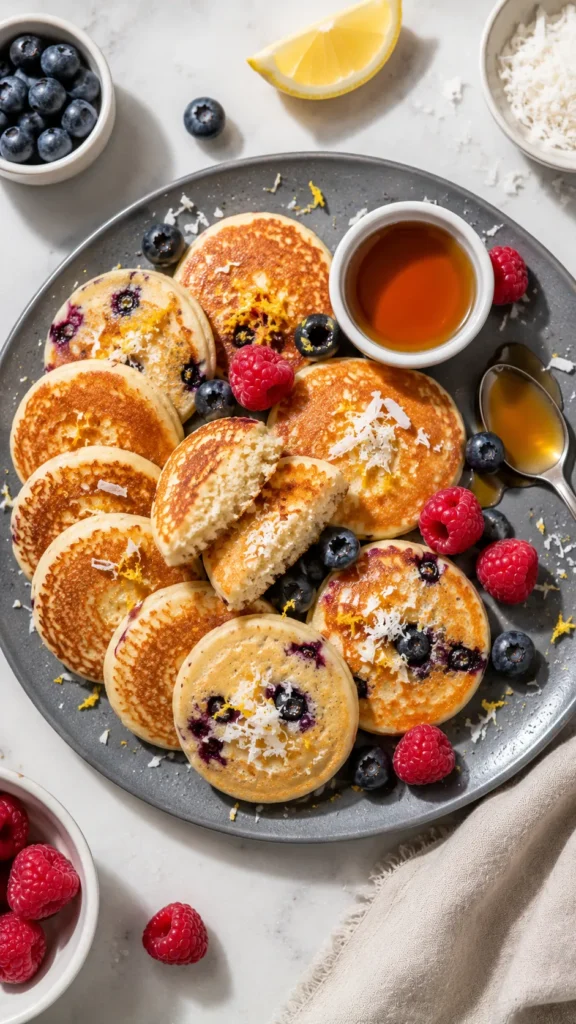
- Lemon-blueberry: Add 1 teaspoon lemon zest and gently fold in 1/2 cup fresh blueberries.
Cook slightly longer.
- Chocolate chip (sugar-free): Stir in 2–3 tablespoons sugar-free dark chocolate chips.
- Spiced version: Add 1/2 teaspoon cinnamon and a pinch of nutmeg for warmth.
- Extra protein: Whisk in 1 scoop unflavored or vanilla whey isolate and 1–2 tablespoons more milk to maintain texture.
- Nut-free and coconut-forward: Stick with coconut milk and omit nut-based toppings for a fully nut-free stack.
FAQ
Can I make the batter ahead?
Yes, but it thickens as it sits. If you mix it the night before, store it covered in the fridge and thin with a splash of milk before cooking.
Why are my pancakes falling apart?
They’re either too big, flipping too early, or your batter is too wet. Make smaller pancakes, wait for the edges to set before flipping, and add a teaspoon of coconut flour if needed.
What’s the best sugar-free sweetener to use?
Allulose gives the softest texture, erythritol stays drier and can crisp the edges, and monk fruit blends are a solid middle ground.
Use what you like and start with 1 tablespoon, then adjust next time.
Can I use canned coconut milk?
Yes. For a richer pancake, use full-fat canned coconut milk and thin with a bit of water if the batter gets too thick.
How do I prevent sticking?
Use a reliable nonstick pan or a well-seasoned griddle, keep the heat moderate, and lightly grease before each batch. A thin film of fat makes all the difference.
Can I make them egg-free?
Coconut flour relies heavily on eggs.
Flax or chia eggs don’t provide the same structure here, and results are often fragile. If you need egg-free, try a different base flour.
How many pancakes does this make?
Using 2 tablespoons of batter per pancake, you’ll get about 10–12 small pancakes, enough for 2–3 servings depending on appetite.
Do they taste like coconut?
There’s a gentle coconut note. Vanilla and your toppings mellow it out.
If you love coconut, it’s a plus; if not, use dairy milk and extra vanilla to soften the flavor.
Can I add mashed banana?
If you’re keeping them sugar-free, skip banana. For a non-sugar-free option, 1/2 mashed banana adds sweetness and moisture—reduce sweetener and add a bit more coconut flour to balance.
What toppings work best?
Fresh berries, a pat of butter, Greek yogurt, unsweetened shredded coconut, chopped nuts, or a warm sugar-free syrup. A squeeze of lemon over berries is bright and delicious.
Wrapping Up
Coconut flour pancakes prove you don’t need sugar to have a stack worth waking up for.
With a handful of pantry staples and a gentle heat, you’ll get fluffy, tender pancakes that fit a wide range of diets. Keep the batter small and the heat moderate, and you’ll nail them every time. Make a double batch on Sunday, freeze the extras, and breakfast is solved for the week.
Printable Recipe Card
Want just the essential recipe details without scrolling through the article? Get our printable recipe card with just the ingredients and instructions.