Sugar-Free Mango Pudding – A Light, Creamy Dessert With Real Fruit
Mango pudding doesn’t need a mountain of sugar to taste amazing. This version is silky, refreshing, and sweetened naturally with ripe mango and a touch of zero-calorie sweetener. It sets softly, scoops beautifully, and feels special enough for guests.
You’ll only need a handful of ingredients and about 15 minutes of hands-on time. Keep it simple, or dress it up with coconut, lime, or a sprinkle of toasted nuts.
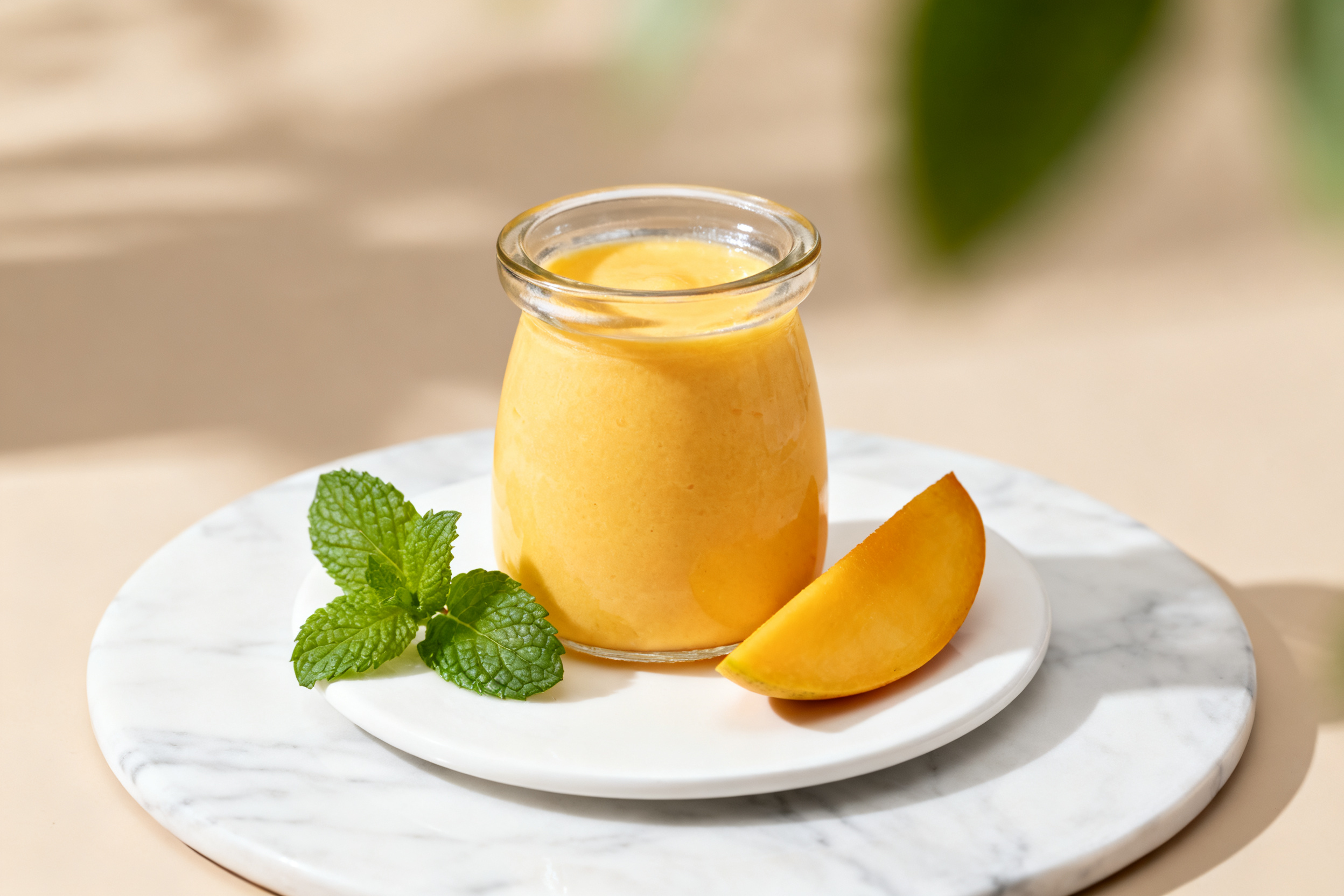
Sugar-Free Mango Pudding - A Light, Creamy Dessert With Real Fruit
Ingredients
Method
- Prep the mango: Peel and cube the mango.Blend until very smooth. You should have about 2 cups of puree. If you want an ultra-smooth pudding, strain the puree through a fine-mesh sieve.
- Bloom the gelatin: Sprinkle the gelatin over 3 tablespoons of cold water in a small bowl.Let it sit for 5 minutes until it swells and looks spongy.
- Warm the dairy: In a small saucepan, combine milk and cream (if using). Add the sweetener and a pinch of salt. Warm over low heat, stirring, until the sweetener dissolves and the mixture is hot but not boiling.
- Melt the gelatin: Remove the warm milk from the heat.Add the bloomed gelatin and stir until fully dissolved. If any grains remain, return to low heat briefly, stirring constantly.
- Combine with mango: In a mixing bowl, whisk together the mango puree, lime juice, and vanilla. Slowly whisk in the warm milk-gelatin mixture until smooth and even.
- Taste and adjust: Taste the mixture.Add a little more sweetener if needed. Remember it will taste slightly less sweet once chilled.
- Chill to set: Pour into 4 to 6 small ramekins or glasses. Cover and refrigerate at least 4 hours, or until the pudding jiggles softly and holds its shape.
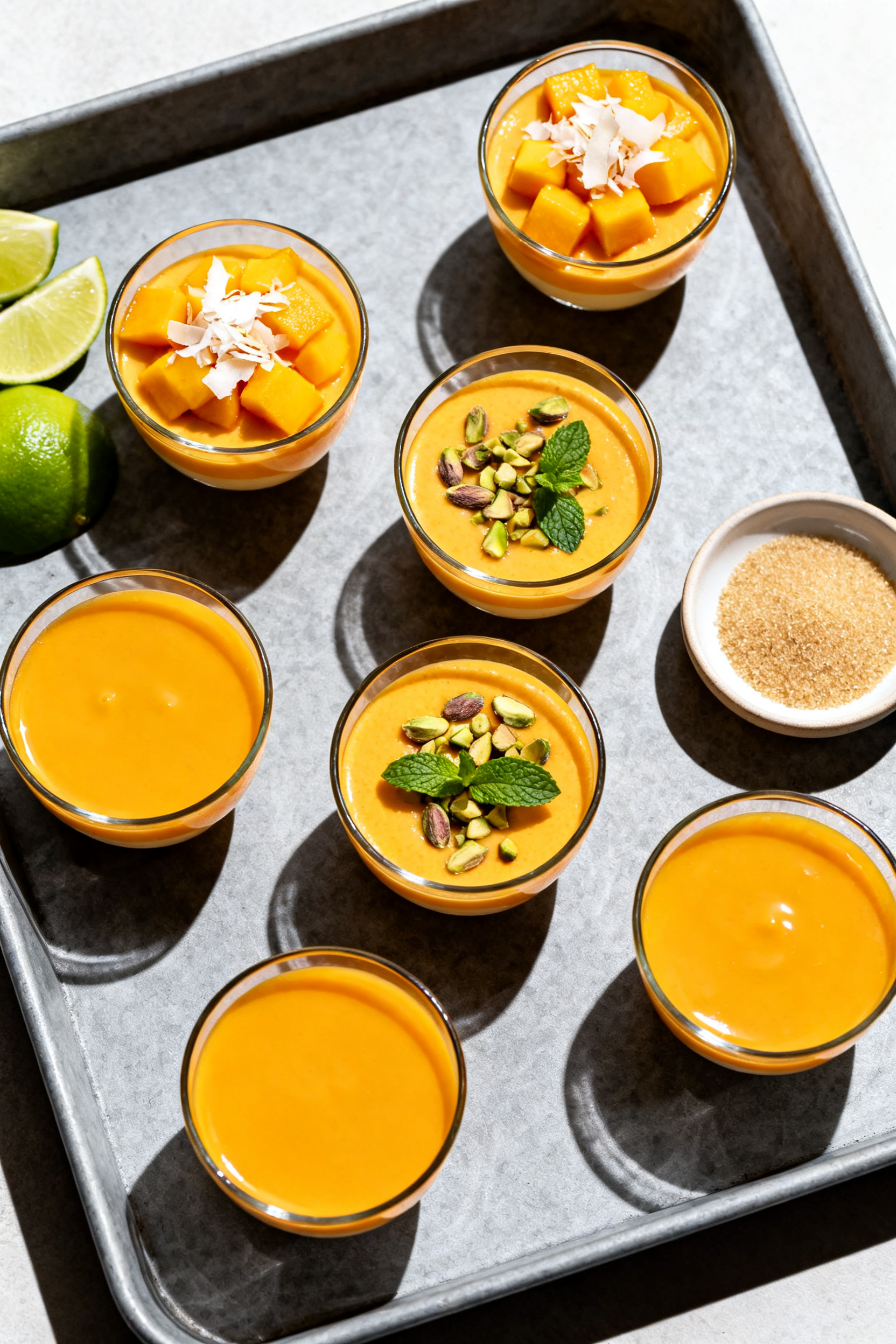
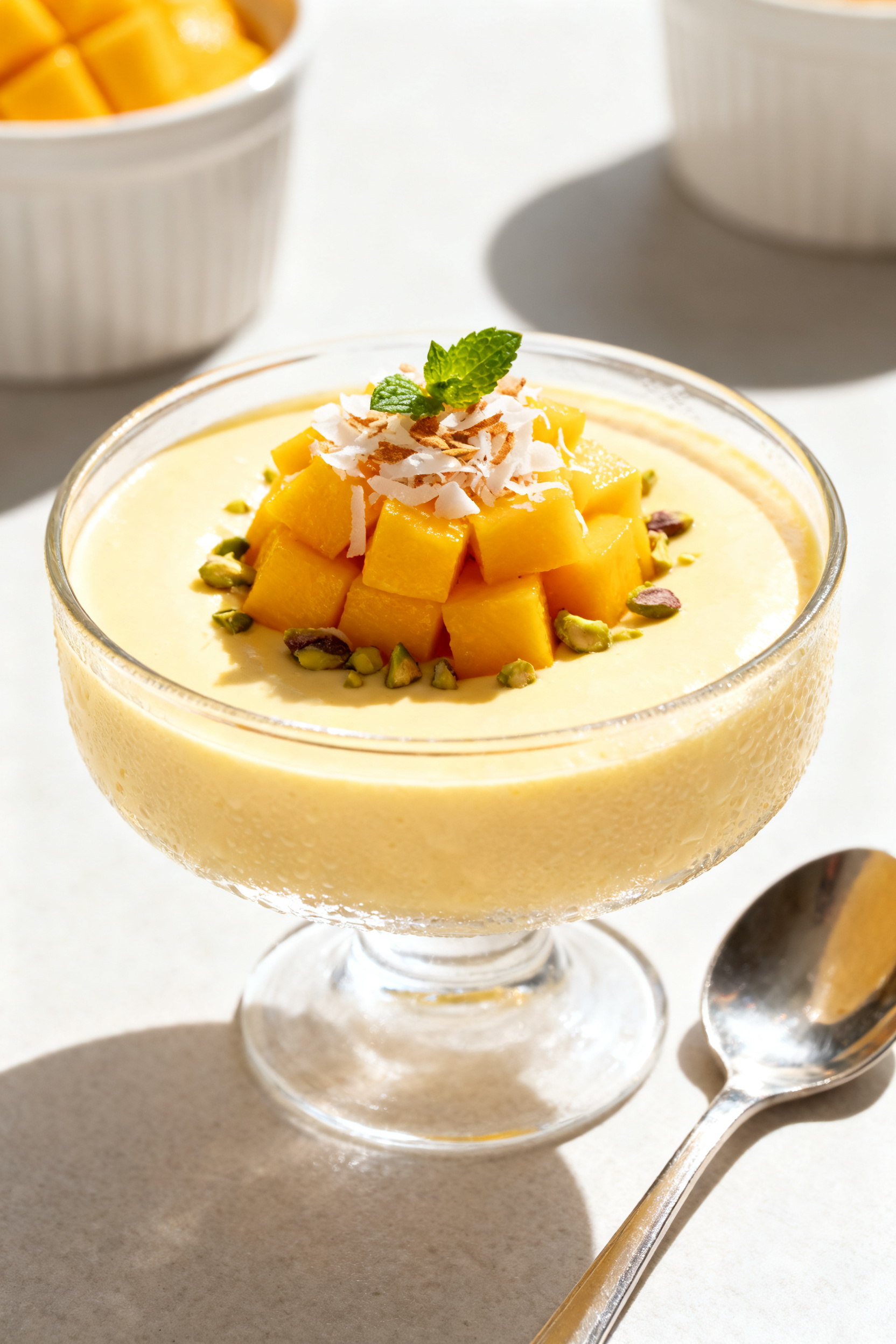
- Garnish and serve: Top with diced mango, toasted coconut, chopped pistachios, or mint.Serve cold.
Why This Recipe Works
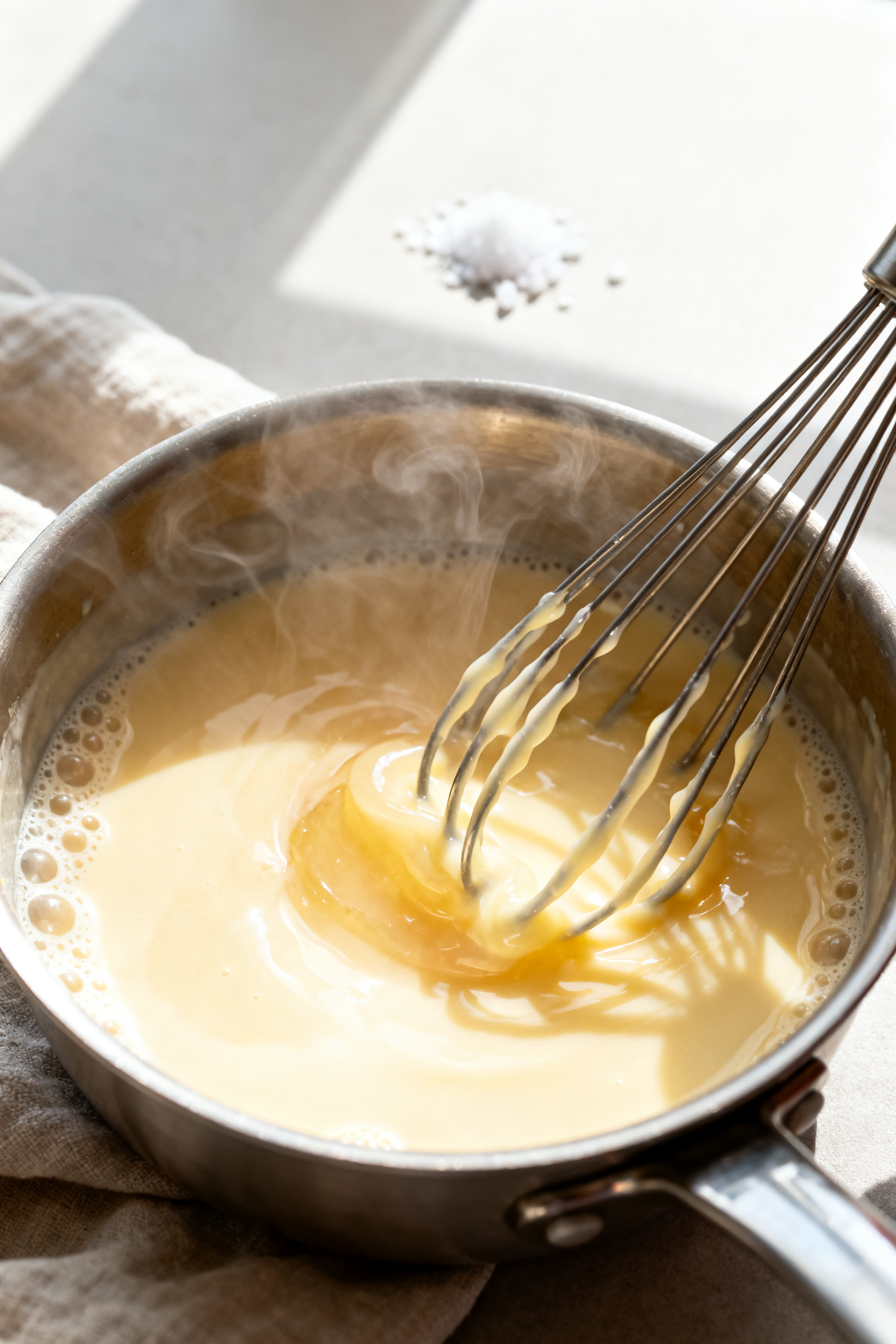
This pudding starts with very ripe mangoes, which bring natural sweetness and vibrant flavor. A small amount of gelatin creates that classic, wobbly custard texture without eggs or heavy cream.
For creaminess, we use milk or a dairy-free option that doesn’t overpower the fruit. A touch of lime brightens the mango and keeps it from tasting flat. Finally, a measured amount of a heat-stable, sugar-free sweetener rounds out the sweetness without aftertaste.
Ingredients
- 2 large ripe mangoes (about 2 cups mango puree), peeled and cubed
- 1 cup milk (dairy or unsweetened almond/coconut milk)
- 1/3 cup heavy cream or full-fat coconut milk (optional, for extra creaminess)
- 2 to 3 tablespoons granulated sugar-free sweetener (erythritol, allulose, or a monk fruit blend), to taste
- 1 tablespoon fresh lime juice (about half a lime)
- 1 teaspoon pure vanilla extract (optional)
- 2 teaspoons powdered unflavored gelatin
- 3 tablespoons cold water (to bloom the gelatin)
- Pinch of salt
- Optional toppings: diced fresh mango, toasted coconut flakes, chopped pistachios, mint leaves, or a dollop of unsweetened yogurt
How to Make It
- Prep the mango: Peel and cube the mango.
Blend until very smooth. You should have about 2 cups of puree. If you want an ultra-smooth pudding, strain the puree through a fine-mesh sieve.
- Bloom the gelatin: Sprinkle the gelatin over 3 tablespoons of cold water in a small bowl.
Let it sit for 5 minutes until it swells and looks spongy.
- Warm the dairy: In a small saucepan, combine milk and cream (if using). Add the sweetener and a pinch of salt. Warm over low heat, stirring, until the sweetener dissolves and the mixture is hot but not boiling.
- Melt the gelatin: Remove the warm milk from the heat.
Add the bloomed gelatin and stir until fully dissolved. If any grains remain, return to low heat briefly, stirring constantly.
- Combine with mango: In a mixing bowl, whisk together the mango puree, lime juice, and vanilla. Slowly whisk in the warm milk-gelatin mixture until smooth and even.
- Taste and adjust: Taste the mixture.
Add a little more sweetener if needed. Remember it will taste slightly less sweet once chilled.
- Chill to set: Pour into 4 to 6 small ramekins or glasses. Cover and refrigerate at least 4 hours, or until the pudding jiggles softly and holds its shape.
- Garnish and serve: Top with diced mango, toasted coconut, chopped pistachios, or mint.
Serve cold.
Keeping It Fresh
Store the pudding covered in the refrigerator for up to 3 days. If making ahead, add toppings right before serving so they stay crisp and bright. To prevent condensation dripping onto the surface, press a piece of plastic wrap directly against the top of each pudding as it cools.
If the pudding weeps a little liquid after a day, gently blot with a paper towel and serve chilled.
Why This is Good for You
- No added sugar: Using a zero-calorie sweetener keeps the dessert light without sacrificing flavor.
- Mango power: Mangoes bring vitamin C, vitamin A, and fiber, along with natural sweetness and color.
- Balanced richness: A modest amount of milk or coconut milk creates creaminess without heavy excess. You can keep it very light by choosing unsweetened almond milk.
- Portion-friendly: Individual cups make it easy to manage serving sizes while still feeling satisfied.
Pitfalls to Watch Out For
- Under-ripe mangoes: If your mango isn’t sweet and fragrant, the pudding will taste dull. Choose very ripe fruit or add a bit more sweetener.
- Boiling the milk: High heat can dull flavors and affect gelatin’s setting power.
Warm gently, don’t boil.
- Skipping the bloom: Gelatin must fully hydrate before heating. Otherwise, you’ll get lumps or a weak set.
- Too much gelatin: More isn’t better. Extra gelatin turns pudding rubbery.
Stick to the measured amount.
- Over-acidifying: While lime brightens flavor, too much acid can weaken the set. Keep to the suggested amount.
- Wrong sweetener texture: Use a granulated or powdered sweetener that dissolves well. Large crystals may stay gritty.
Recipe Variations
- Coconut-Mango Pudding: Use full-fat coconut milk for all the dairy, add 1 to 2 tablespoons unsweetened shredded coconut to the base, and top with toasted coconut flakes.
- Greek Yogurt Swirl: After mixing the base, fold in 1/2 cup plain Greek yogurt for a tangy note and a bit of protein.
Sweeten to taste since yogurt adds tartness.
- Cardamom Kiss: Add 1/4 teaspoon ground cardamom to the warm milk. It pairs beautifully with mango and brings gentle warmth.
- Chia-Mango Cups (No Gelatin): Skip gelatin. Stir 1/4 cup chia seeds into the mango-milk mixture and chill overnight.
Texture will be thicker and spoonable, like a parfait.
- Layered Fruit Cups: Spoon a layer of finely diced strawberries or kiwi into the bottom of each glass before adding the pudding for color and contrast.
- Dairy-Free Delight: Use almond milk and coconut cream. Check your sweetener to ensure it’s dairy-free too.
FAQ
Can I use frozen mango?
Yes. Thaw completely and drain excess liquid before blending.
Taste the puree; frozen mango can be slightly less sweet, so you may need an extra teaspoon or two of sweetener.
What’s the best sugar-free sweetener for this?
Allulose or a monk fruit–erythritol blend work well. They dissolve easily and taste clean. Start with 2 tablespoons and adjust to your preference.
How firm should the pudding be?
It should be softly set and creamy, not bouncy.
If you prefer a firmer set for unmolding, add an extra 1/2 teaspoon of gelatin, but expect a slightly less silky texture.
Can I make it vegan?
Yes. Use almond or coconut milk and replace gelatin with agar-agar. Start with 1 teaspoon agar powder simmered in the milk for 2 minutes, then mix with mango.
The texture will be a bit firmer.
How can I fix a pudding that didn’t set?
If it’s still liquid after 6 hours, gently warm the mixture in a saucepan until fully fluid, dissolve an additional 1/2 to 1 teaspoon gelatin in a bit of warm milk, stir in, and rechill. Avoid boiling.
Can I reduce the carbs further?
Yes. Use unsweetened almond milk and skip the heavy cream.
Keep portions modest and avoid high-carb toppings like lots of extra fruit.
Is fresh lime necessary?
It helps brighten flavors, but you can skip it or swap in lemon juice. Start with 1 teaspoon and add more to taste.
How long will it last in the fridge?
Up to 3 days. After that, texture and flavor begin to decline.
Final Thoughts
Sugar-Free Mango Pudding is all about ripe fruit, gentle sweetness, and a silky finish.
With a short ingredient list and easy steps, it makes a great weeknight dessert or a make-ahead treat for guests. Keep it classic, or try a variation that fits your style. Either way, you’ll get bright mango flavor without the sugar crash—and that’s a win for any sweet tooth.
Printable Recipe Card
Want just the essential recipe details without scrolling through the article? Get our printable recipe card with just the ingredients and instructions.