Make the raspberry puree: Add raspberries, granulated sugar, and lemon juice to a small saucepan.
Cook over medium heat, stirring, until the berries break down and the sugar dissolves, 5–7 minutes. Taste and adjust sweetness. You want a bright, slightly tart flavor.
Strain the seeds: Press the warm mixture through a fine-mesh sieve into a bowl to remove the seeds.
You should have a smooth coulis. Let it cool to lukewarm. This step keeps the mousse silky.
If using gelatin, bloom it: Sprinkle the gelatin over cold water in a small bowl.
Let it sit 5 minutes until spongy. Gently warm the bloomed gelatin in the microwave for a few seconds or over a hot water bath until just melted—do not boil.
Stabilize the puree (optional but recommended): Stir the melted gelatin into the lukewarm raspberry puree until fully combined. If the puree is too hot, it can weaken the set; if it’s too cold, the gelatin can clump.
Aim for just warm to the touch.
Chill the puree slightly: Place the bowl of puree in the fridge for 10–15 minutes, stirring once or twice. It should thicken slightly but remain pourable.
Whip the cream: In a cold bowl, whip the heavy cream with vanilla until soft peaks form. If you like a sweeter mousse, add powdered sugar and continue beating to medium-soft peaks.
Avoid stiff peaks; they don’t fold as smoothly.
Lighten the base: Stir a large spoonful of whipped cream into the raspberry puree to loosen it. This makes folding the rest easier and helps keep the mousse airy.
Fold gently: Add the remaining whipped cream in two to three additions. Use a spatula to fold with light, sweeping motions, rotating the bowl as you go.
Stop as soon as the color looks even and no streaks remain.
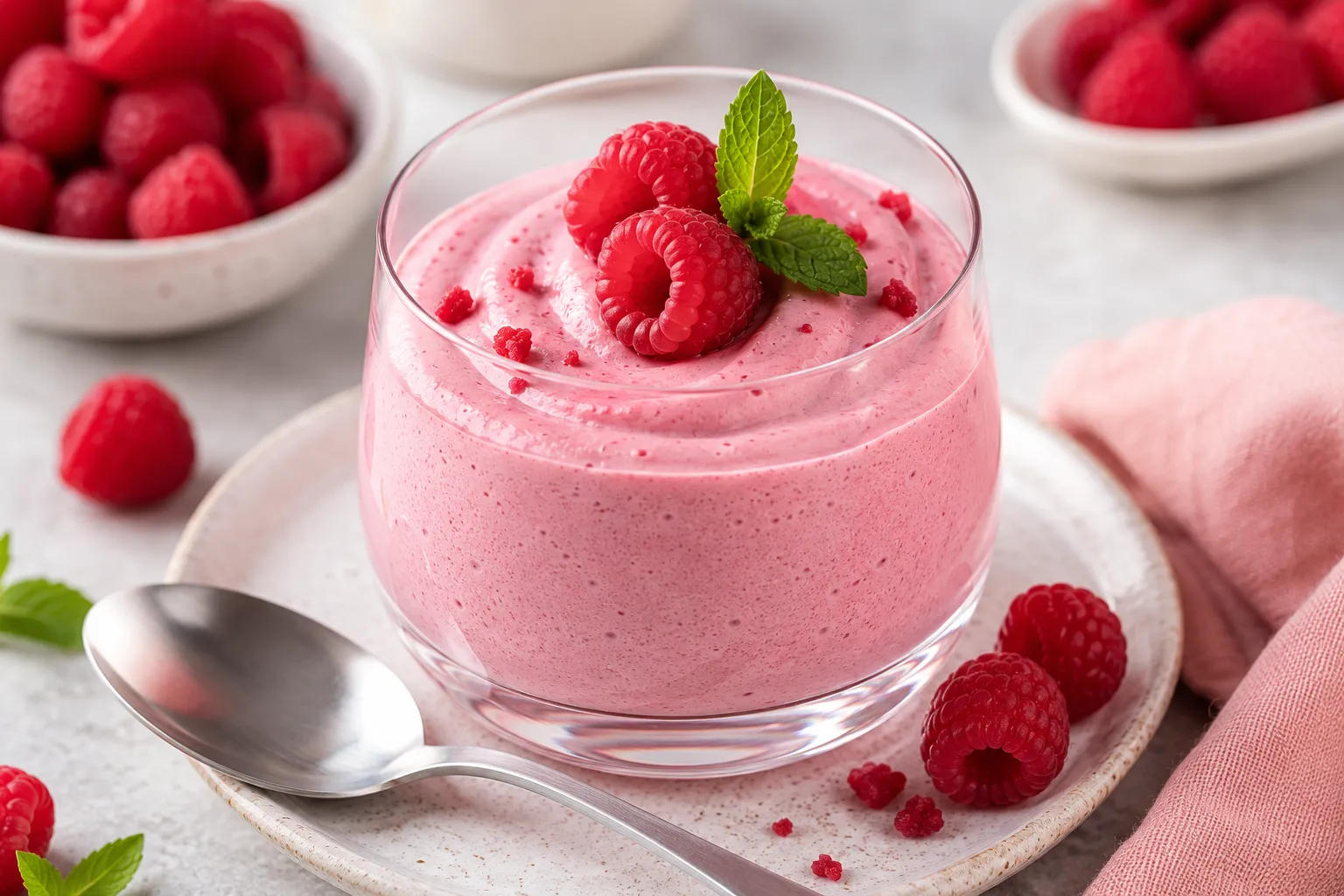
Portion and chill: Spoon or pipe the mousse into serving glasses, ramekins, or a larger bowl. Cover and chill for at least 2–3 hours, or until set. With gelatin, it will set more firmly; without it, it will be soft and cloud-like.
Garnish and serve: Top with fresh raspberries, a small dollop of whipped cream, and a mint leaf.
Serve cold.