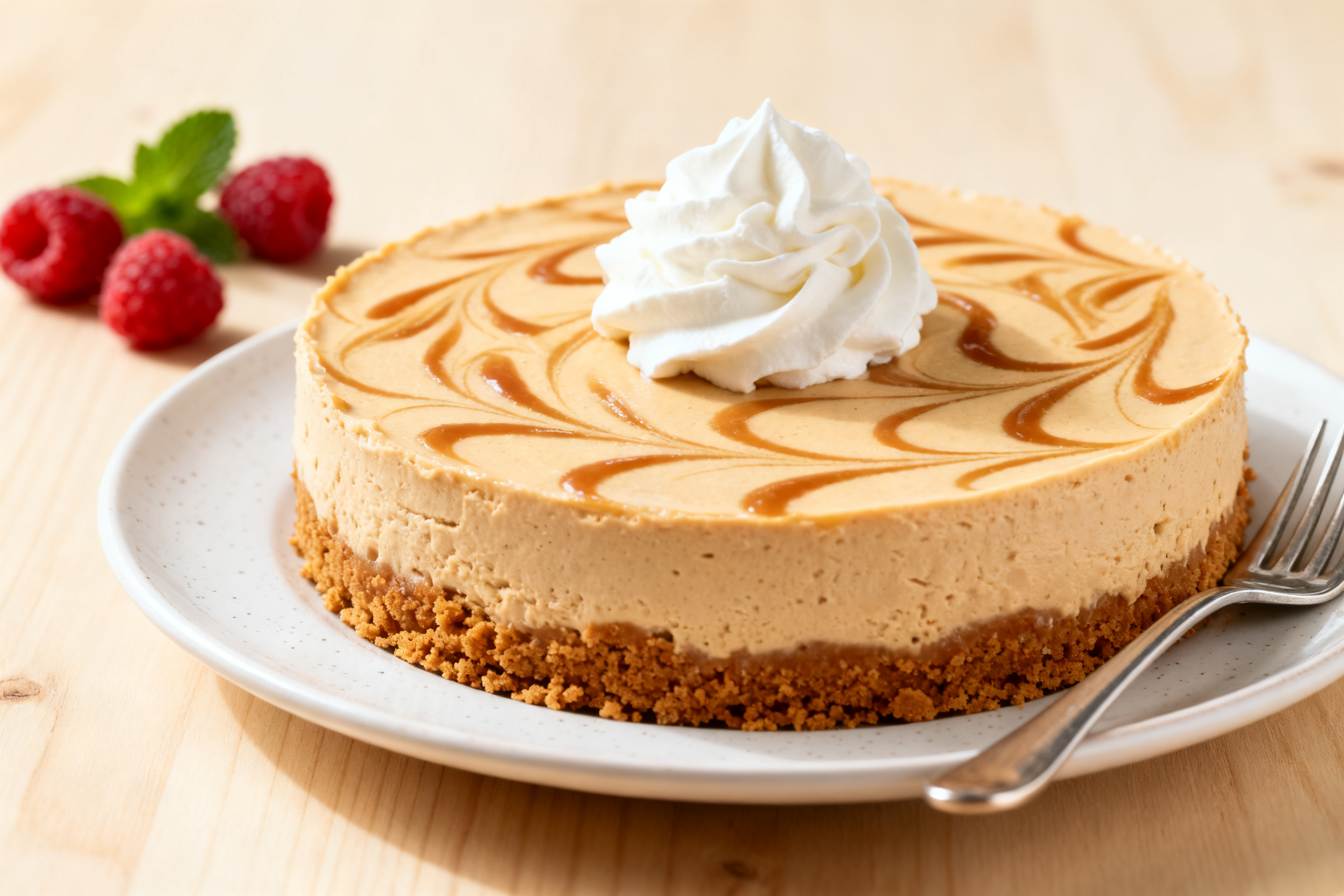
Prep your pan. Line the base of a 9-inch (23 cm) springform pan with parchment.
Lightly grease the sides if you like cleaner edges.
Make the crust. Crush the Biscoff cookies into fine crumbs using a food processor or a zip-top bag and rolling pin. Stir in the melted butter until the mixture resembles wet sand.
Press and chill. Tip the crumbs into the pan and press firmly into an even base, pushing a bit up the sides if you prefer. Use a flat-bottomed glass for a tight, even crust.
Chill for 20 minutes while you make the filling.
Beat the cream cheese. In a large bowl, beat the cream cheese until smooth and fluffy, about 2 minutes. Scrape down the bowl so there are no lumps.
Add sweetness and flavor. Mix in powdered sugar, vanilla, salt, and 120 g (a generous 1/3 cup) of Biscoff spread. Beat until silky and well combined.
Whip the cream. In a separate bowl, whip the cold heavy cream to medium-stiff peaks.
It should hold shape but still look smooth, not grainy.
Fold gently. Add one-third of the whipped cream to the cheesecake mixture and fold to loosen. Fold in the rest until the filling is airy and uniform. Avoid overmixing.
Fill the pan. Spoon the filling over the chilled crust.
Smooth the top with an offset spatula. Tap the pan lightly on the counter to release trapped air.
Chill to set. Cover and refrigerate for at least 6 hours, preferably overnight, until firm enough to slice.
Make the Biscoff topping. Warm the remaining Biscoff spread (about 80 g/1/4 cup) in short bursts in the microwave or over a double boiler until pourable but not hot. Cool slightly so it’s warm and fluid, not scorching.
Finish and garnish. Run a thin knife around the cake, release the springform, and slide the cheesecake onto a serving plate.
Pour the warm Biscoff over the top and tilt the cake gently to create a smooth glaze. Garnish with crushed cookies or a few whole ones along the edge.
Slice and serve. For clean slices, warm a sharp knife under hot water, wipe dry, cut, and repeat between slices.